![Reblog this post [with Zemanta]](https://lh3.googleusercontent.com/blogger_img_proxy/AEn0k_tK0DnLJLT-BBYBMJthHUpeCqZxWopmuNr_97em4JrJ2CxfFQt6rXukZp6ln17DMX30SVBkv36yDmmC9oO0x5S0369ptJLOBHfRwtdhckU5RUYzel7Y4NtbxEroKLStmVoqYBvpclzOnzWKy586c8a2=s0-d)
Thursday, April 1, 2010
Gay Relationships and Spiritual Practice- Gregory Millard, Ph.D
Talk and discussion on gay relationships by Gregory Millard, Ph.D., a clinical psychologist who specializes working with gay men. Greg incorporates mindfulness awareness and training as a part of the therapy he provides to both individuals and couples. Greg's own spiritual practice includes yoga, meditation, and an active involvement with community. For questions about the talk, send an email to Greg at gamillard@aol.com. For more information on the Gay Buddhist Sangha, visit http://gaybuddhisgtsangha.com.


Honpa Hongwanji Mission of Hawai'i

LEGISLATIVE ASSEMBLY ADOPTS RESOLUTION SUPPORTING THE RIGHTS OF SAME-GENDER COUPLES
On Friday, February 12, 2010, the 98th Annual Legislative Assembly of the Honpa Hongwanji Mission of Hawaii approved a resolution in support of equal rights for same-gender couples.
"Members of our Sangha (congregation) believe we should share our perspective on this important issue," said President Alton Miyamoto. "We want to share our Buddhist values of Universal Compassion, Equality and Interdependence with the larger community. We believe this issue is a matter of civil rights. We affirm the human dignity and worth of all people and that everyone deserves equal treatment within our society." Over 100 delegates and observers from 36 temples across the State of Hawaii convened at the state headquarters located at 1727 Pali Highway. The Honpa Hongwanji Mission of Hawaii is a Shin Buddhist community which celebrated its 120th Anniversary in Hawaii in 2009. The Honpa Hongwanji Mission of Hawaii is the largest Buddhist denomination in Hawaii.
"Our primary goal as Buddhists is to awaken to the spiritual truth of interdependence and equality," said Bishop Thomas R. Okano. "To truly realize interdependence we need to become aware of the inherent interconnectedness with others and develop a profound sense of compassion and responsibility for the welfare of all beings. In Buddhism, the ideal is Universal Compassion. If it's good for one person, it must be good for another. Equality is of prime importance."
ESTABLISHING THE RIGHTS OF SAME-GENDER COUPLES
WHEREAS, the Dharma (universal teachings) provides guidance on how to live
mindfully with an awareness of universal compassion which embraces and uplifts each and every
person; and
WHEREAS, in order to truly realize universal compassion, we need to cultivate a
profound sense of responsibility for the welfare of all beings; and
WHEREAS, the Buddhist ideal of universal compassion does not discriminate between
good and evil, young and old, rich and poor, gay and straight; and
WHEREAS, Buddhism affirms the inherent worth and dignity of all persons independent
of gender; and
WHEREAS, families today are composed of many combinations and what connects
individuals as a family is a conscious commitment to share in the responsibilities of life; and
WHEREAS, the Dharma (universal teachings) affirms and celebrates human expressions
of love and partnership, guiding us to strive for responsible, faithful, and committed relationships
that recognize and respect the Buddha-nature (potential for Enlightenment) in all people; and
WHEREAS, Shakyamumi Buddha, the founding teacher of Buddhism, encouraged
people to carefully reflect on all situations and to find truth for themselves by teaching that all
beliefs, even the Buddha's own words, should not be accepted unless they have been tested
through objective observation, careful logical analysis and positive life experiences; and
WHEREAS, Shinran Shonin, the founder of Shin Buddhism, affirmed the inherent
equality among all people whose lives are karmically (causally) bound and interconnected by
teaching that the great Wisdom and Compassion of Amida (ultimate reality) embraces all beings
equally and unconditionally without exception; and
WHEREAS, some Shin Buddhist ministers and Sangha (congregations) have held
commitment services to honor the relationships of gay and lesbian couples for some time; and
WHEREAS, the rights of same-gender couples is an issue deserving of serious and
mindful discussion by faith communities; NOW, THEREFORE,
BE IT RESOLVED, that the Honpa Hongwanji Mission of Hawaii, a Shin Buddhist
organization, affirms that same-gender couples should have access to equal rights and quality of
life as conferred by legally recognized marriage; and
BE IT FURTHER RESOLVED, that same-gender unions shall be considered equal to
opposite-gender unions in ceremonies officiated by its ministers; and
BE IT FURTHER RESOLVED, that the Honpa Hongwanji Mission of Hawaii shall
pursue opportunities through which its members, friends and the general public can better
understand Shin Buddhist teachings in relation to same-gender unions; and
BE IT FURTHER RESOLVED, that copies of this resolution be transmitted to all
temples and organizations affiliated with the Honpa Hongwanji Mission of Hawaii, other
Buddhist organizations in Hawaii, the Governor of the State of Hawaii, members of the Hawaii
State Legislature, and members of the Hawaii news media.
Please click here for FACT SHEET
Wednesday, March 24, 2010
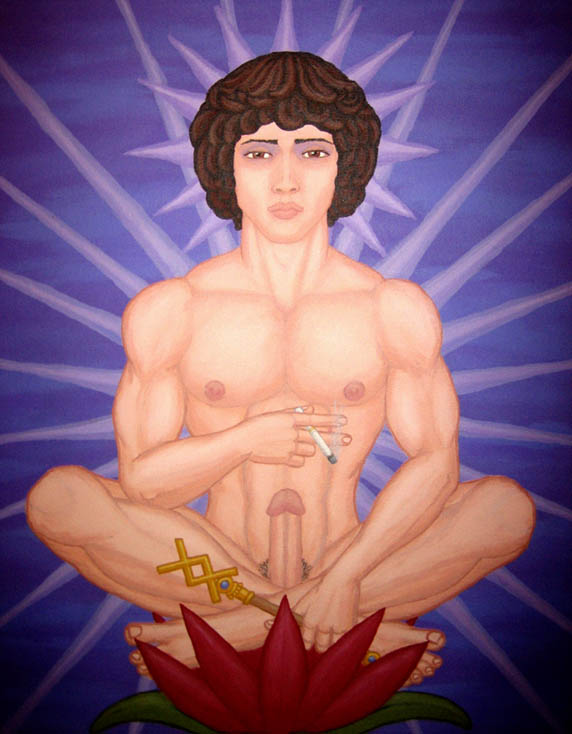
Antinous the Gay God
THE GOD OF HOMOSEXUALITY
Antinous The Beautiful
His face is full of Grace,
His Countenance is Beautiful.
The Restorer, The New Dionysus
Whose Salvation Has been Accomplished
He has again been Raised to Life.


.jpg)
Temple of Antinous
The Sacred Antinous
Virtual Museum: Antinous Portraits
![Reblog this post [with Zemanta]](https://lh3.googleusercontent.com/blogger_img_proxy/AEn0k_vKtEipeoM76rlfrV431Q_TwltyERoR3Nw_a4tvwBqJ0VXRbH2D98uTZTwNfSrHkYC05oDfdOai_Pbpmg3AqkDAgSvQl7VAGpxD1181KYu6PWU8doxc9ltrhGi5bAWg0rPmgZ7Y23wi1RkILOrBXEKE=s0-d)
Tuesday, March 23, 2010
Thursday, March 18, 2010
Get a free "Queer the Census" sticker!
Dear Friend,
The census is not necessarily the topic you've been waiting to hear about, I know, but bear with me for a moment.
It's coming up in March or April, and while it's supposed to be an accurate count of everyone in the country, there's no question that asks if someone is lesbian, gay, bisexual or transgender.
This is a huge problem. The data collected has a direct impact on issues that are critical to every American - issues like health care, economic stability, safety. And when LGBT people are not counted, individuals, families, and communities suffer.
The good news is that we can change this. Join me and sign the petition from CREDO Action and The National Gay and Lesbian Task Force urging the Census Bureau to make sure everyone is counted.
http://act.credoaction.com/sticker/queerthecensus?r_by=-2704780-1O74N7x
The census is not necessarily the topic you've been waiting to hear about, I know, but bear with me for a moment.
It's coming up in March or April, and while it's supposed to be an accurate count of everyone in the country, there's no question that asks if someone is lesbian, gay, bisexual or transgender.
This is a huge problem. The data collected has a direct impact on issues that are critical to every American - issues like health care, economic stability, safety. And when LGBT people are not counted, individuals, families, and communities suffer.
The good news is that we can change this. Join me and sign the petition from CREDO Action and The National Gay and Lesbian Task Force urging the Census Bureau to make sure everyone is counted.
http://act.credoaction.com/sticker/queerthecensus?r_by=-2704780-1O74N7x
Wednesday, March 17, 2010
Roman Homosexuality: Second Edition

Editorial Reviews
Review
"This book may do more for the understanding of classical sexuality than any since Kenneth Dover's Greek Homosexuality of twenty years ago."--Times Literary Supplement
"This is an important and ground-breaking study."--Choice
"This book by Craig A. Williams combines lucid analysis of the protocols governing male sexual behavior in ancient Rome with comprehensive documentation from literary sources.... It is a landmark work of scholarship and should prove accessible to scholars of all disciplines."--American Historical Review
"This indispensable book persuasively sets forth gender identity, not sexual orientation, as the fulcrum of male sexual significance in Roman society."--Religious Studies Review
Product Description
Ten years after its original publication, Roman Homosexuality remains the definitive statement of this interesting but often misunderstood aspect of Roman culture. Learned yet accessible, the book has reached both students and general readers with an interest in ancient sexuality. This second edition features a new foreword by Martha Nussbaum, a completely rewritten introduction that takes account of new developments in the field, a rewritten and expanded appendix on ancient images of sexuality, and an updated bibliography.
![Reblog this post [with Zemanta]](https://lh3.googleusercontent.com/blogger_img_proxy/AEn0k_uLm3JjM8oDdKW4pSKHwbglp_fYo_jpyN2BMeb1TZoKAd9XMo2PjLHMertbz-Hu5s8A741dDrIaqf8ATHOcfu_IBa2CyVdKyGcQWj_FvJf8wAjNxOTF1cCV7RGOTR9ghFXsl_N7tmMC1P-s7de-Jz2X=s0-d)
Sunday, March 14, 2010
Saturday, March 13, 2010
Rennyo and the Roots of Modern Japanese Buddhism

Editorial Reviews
Review
"In Japan's turbulent fifteenth century, the gifted proselytizer Rennyo rebuilt his relatively small following, the Shin Buddhist Honganji lineage, into a formidable nationwide organization. Drawing together new research from both Japanese and Western scholars and representing a range of methodological perspectives, this collection of essays sheds valuable light on Rennyo's place in the social, political, and religious transformations of his day and the meaning of his legacy for contemporary Japanese Buddhism. This volume will benefit scholars and students of Japanese religion as well as others interested in Shin Buddhist history and thought or in issues in the formation and legitimation of religious traditions."--Jacqueline I. Stone, Princeton University, author ofOriginal Enlightenment and the Transformation of Medieval Japanese Buddhism
"The history of Shin Buddhism, Japan's massive Buddhist school, can be divided into two halves: first, when it was a peripheral and inconsequential Buddhist movement, and second, when it emerged as a religious institution of unparalleled success and influence. The dividing point between the two was Rennyo, the leader of its head temple, Honganji, in the late fifteen century. This volume is a selection of recent and top-tier scholarship on Rennyo. It elucidates his many achievements and the lasting effects he has had on Shin Buddhism and Japanese religion as a whole. Many aspects of Rennyo's life, activities, and religious thought are explored in a depth previously unavailable in English. In the end, Rennyo emerges as a kaleidoscopic figure through which we can see better the character of Shin Buddhism and the development of Japan's religious traditions."--James C. Dobbins author of Jodo Shinshu: Shin Buddhism in Medieval Japan
"In Japan's turbulent fifteenth century, the gifted proselytizer Rennyo rebuilt his relatively small following, the Shin Buddhist Honganji lineage, into a formidable nationwide organization. Drawing together new research from both Japanese and Western scholars and representing a range of methodological perspectives, this collection of essays sheds valuable light on Rennyo's place in the social, political, and religious transformations of his day and the meaning of his legacy for contemporary Japanese Buddhism. This volume will benefit scholars and students of Japanese religion as well as others interested in Shin Buddhist history and thought or in issues in the formation and legitimation of religious traditions." --Jacqueline I. Stone, Princeton University, author of Original Enlightenment and the Transformation of Medieval Japanese Buddhism
"The history of Shin Buddhism, Japan's massive Buddhist school, can be divided into two halves: first, when it was a peripheral and inconsequential Buddhist movement, and second, when it emerged as a religious institution of unparalleled success and influence. The dividing point between the two was Rennyo, the leader of its head temple, Honganji, in the late fifteen century. This volume is a selection of recent and top-tier scholarship on Rennyo. It elucidates his many achievements and the lasting effects he has had on Shin Buddhism and Japanese religion as a whole. Many aspects of Rennyo's life, activities, and religious thought are explored in a depth previously unavailable in English. In the end, Rennyo emerges as a kaleidoscopic figure through which we can see better the character of Shin Buddhism and the development of Japan's religious traditions."--James C. Dobbins, author of Jodo Shinshu: Shin Buddhism in Medieval Japan
"The history of Shin Buddhism, Japan's massive Buddhist school, can be divided into two halves: first, when it was a peripheral and inconsequential Buddhist movement, and second, when it emerged as a religious institution of unparalleled success and influence. The dividing point between the two was Rennyo, the leader of its head temple, Honganji, in the late fifteen century. This volume is a selection of recent and top-tier scholarship on Rennyo. It elucidates his many achievements and the lasting effects he has had on Shin Buddhism and Japanese religion as a whole. Many aspects of Rennyo's life, activities, and religious thought are explored in a depth previously unavailable in English. In the end, Rennyo emerges as a kaleidoscopic figure through which we can see better the character of Shin Buddhism and the development of Japan's religious traditions."--James C. Dobbins author of Jodo Shinshu: Shin Buddhism in Medieval Japan
"In Japan's turbulent fifteenth century, the gifted proselytizer Rennyo rebuilt his relatively small following, the Shin Buddhist Honganji lineage, into a formidable nationwide organization. Drawing together new research from both Japanese and Western scholars and representing a range of methodological perspectives, this collection of essays sheds valuable light on Rennyo's place in the social, political, and religious transformations of his day and the meaning of his legacy for contemporary Japanese Buddhism. This volume will benefit scholars and students of Japanese religion as well as others interested in Shin Buddhist history and thought or in issues in the formation and legitimation of religious traditions." --Jacqueline I. Stone, Princeton University, author of Original Enlightenment and the Transformation of Medieval Japanese Buddhism
"The history of Shin Buddhism, Japan's massive Buddhist school, can be divided into two halves: first, when it was a peripheral and inconsequential Buddhist movement, and second, when it emerged as a religious institution of unparalleled success and influence. The dividing point between the two was Rennyo, the leader of its head temple, Honganji, in the late fifteen century. This volume is a selection of recent and top-tier scholarship on Rennyo. It elucidates his many achievements and the lasting effects he has had on Shin Buddhism and Japanese religion as a whole. Many aspects of Rennyo's life, activities, and religious thought are explored in a depth previously unavailable in English. In the end, Rennyo emerges as a kaleidoscopic figure through which we can see better the character of Shin Buddhism and the development of Japan's religious traditions."--James C. Dobbins, author of Jodo Shinshu: Shin Buddhism in Medieval Japan
Product Description
Rennyo is undeniably one of the most influential persons in the history of Japanese religion and yet his thought remains somewhat enigmatic from the standpoint of what is considered orthodox Shinshu doctrine today. This book, which collects ten unpublished essays by both Japanese and non-Japanese scholars, will be the first to confront many of the major questions surrounding the phenomenal growth of Honganji under Rennyo's leadership, such as the source of his charisma, the soteriological implications of his thought against the background of other movements in Pure Land Buddhism, and the relationship between his ideas and the growth of his church. The volume is intended as an important first step in expanding the field of Rennyo studies outside Japan, and to provide significant stimulus to the fields of Japanese religion, Japanese social history, comparative religion, and sociology of religion.
Originally posted on Buddha Torrents
![Reblog this post [with Zemanta]](https://lh3.googleusercontent.com/blogger_img_proxy/AEn0k_sPEV8O5WEQqxS0tGZ1EG2RVjmW0rKRVbPCczp-zFWsDanX136ZmMZOIaaNzbuGR2j-aJoCppHRxYqtl9C39jEjR1GaUX0E62zEKfczdB29aYp1bkuYN6vszDwyX1exeOWW5pRojsyGEBO1zG0eczVo=s0-d)
NPR.org - Jesus And The Hidden Contradictions Of The Gospels


Bible scholar Bart Ehrman began his studies at the Moody Bible Institute in Chicago. Originally an evangelical Christian, Ehrman believed that the Bible was the inerrant word of God. But later, as a student at Princeton Theological Seminary, Ehrman started reading the Bible with a more historical approach and analyzing contradictions in the Gospels.
Ehrman, the author of Jesus, Interrupted: Revealing the Hidden Contradictions in the Bible (and Why We Don't Know About Them), tells Terry Gross that he discourages readers from "smash[ing] the four Gospels into one big Gospel and think[ing] that [they] get the true understanding."
"When Matthew was writing, he didn't intend for somebody ... to interpret his Gospel in light of what some other author said. He had his own message," Ehrman says.
To illustrate the differences between the Gospels, Ehrman offers opposing depictions of Jesus talking about himself. In the book of John, Jesus talks about himself and proclaims who he is, saying "I am the bread of life." Whereas in Mark, Jesus teaches principally about the coming kingdom and hardly ever mentions himself directly. These differences offer clues into the perspectives of the authors, and the eras in which they wrote their respective Gospels, according to Ehrman.
*Listen/Watch on NPR.org*
Many stories at NPR.org have audio or video content. When you visit the link
above, look for a "Listen" or "Watch" button.
For technical support, please visit NPR's Audio/Video Help page:
http://www.npr.org/help/media.html
![Reblog this post [with Zemanta]](https://lh3.googleusercontent.com/blogger_img_proxy/AEn0k_ukT3ZQCTO9Azx4PsExmRXE-TdwUgv1H4ydGLS4uIjbRwlMjpBmRB5YLT7sTkwXlPZR7G5Z64AwkyXPv8VeCCJW2g3BM7BLOMbX_vLlfeO-3uNjaE3jAHO8Wjg26heAHPu-sIZxyk5n_nUceq6r97S3=s0-d)
Thursday, March 11, 2010
Buddhism and the Romani

MARCH 7, 2010
The Romani, referred to colloquially and often derogatorily as gypsies, number somewhere between 8 to 12 million living principally in Europe, but also in some areas of the Middle East and Asia. Census data is inexact due to many of the people’s stateless status. They have no discernible homeland although genetically and by culture it is speculated that their origins were somewhere in South Asia (India). While most are legitimate citizens of the countries in which they live in Europe, many are often not afforded the same level of consideration in terms of education, health care, rights and other amenities as the majority of citizens.
There have been some efforts by some states to assist the Romani in ameliorating some of the disparities however most efforts have been by NGOs and some religious groups including the FWBO-Friends of the Western Buddhist Order. Here are a series of reports from that group on their efforts in Hungary.
The ties between the FWBO and the Ambedkar Buddhists in India are quite deep and mutually influential. Here is some information about the Ambedkar Buddhists in India.
Each year in India tens of thousands of Dalits (formerly called untouchables) convert to Buddhism and reject the caste system and its discrimination. There is a national holiday in India in the name of Dr. Ambedkar. Dr. Ambedkar’s approach is now being taken up by the Roma (gypsies) in Hungary in light of their ancestral connections to India and the pervasive discrimination they face in Europe. Here’s a little information about Dr. Ambedkar.
Dr. B. R. Ambedkar-Dr. Ambedkar was one of the first Dalits to obtain a college education…After meetings with the Sri Lankan Buddhist monkHammalawa Saddhatissa, Ambedkar organized a formal public ceremony for himself and his supporters in Nagpur on October 14, 1956. Accepting the Three Refuges and Five Precepts from a Buddhist monk in the traditional manner, Ambedkar completed his own conversion. He then proceeded to convert an estimated 500,000 of his supporters who were gathered around him. (preceding from Wikipedia)
So via the FWBO, Ambedkar Buddhists in India and several scholars of Roma heritage in Hungary who have converted to Buddhism and have taken up Ambedkar’s approach to ameliorating the suffering of a whole group of people new initiatives are underway. There has been a new high school set up in Hungary that runs on Buddhist principles and numerous other projects are being planned.
This potentially new social movement is in it’s early stages. It will be interesting to see what comes of these efforts. There are many questions that arise from this interaction.
How will Ambedkar’s ideas translate into a European context?
How will these new Buddhist converts be viewed by the larger communities in which they live?
Will the current Buddhist convert establishment in Europe, or elsewhere embrace these new members?
Will these Roma Buddhist converts become outcasts within the larger Roma community due to their conversions?
Will conversion allow them increased access to services that have been denied to them previously?
How will conversion impact current lifestyles of both Roma and non-Roma?
Will people in other minority groups take up conversion also in an attempt to improve their relations with the larger cultures in which they live?
It remains to be seen what will come of this relatively new development. Below are some links to further information.
Links
Ambedkar in Hungary- from The Hindu national newspaper in India (November 22, 2009)
Ambedkarite Buddhism is a blog kept by Ashwin Jangam, an Indian national, in which he has chronicled the Ambedkarite movement among the Romani in Hungary and his involvement there with non-profit non-governmental Buddhist agencies.
Dr. Ambedkar High School is a Buddhist oriented institute in Hungary where Roma children can further their education without discrimination. FWBO is one of their affiliates.
History of the Romani people from Wikipedia contains some of the scientific studies regarding linguistics and genetics that link the Romani with the Indian sub-continent
![Reblog this post [with Zemanta]](https://lh3.googleusercontent.com/blogger_img_proxy/AEn0k_tJmNl7wHJ2kstTYAr5M8auJiuXvm1XTpuGekdfkWxQHVtqYq1bJ9kHT0uhKRRtAcF1eKorMVpVCRNOb9XHRglhGjsT5HspEjhyeLIQNw90JgX8NrMHhPSEx9XqEI0fYZFipM_esMs43yacD3GwFors=s0-d)
Mississippi: Prom Canceled Over Same-Sex Date Policy
By THE ASSOCIATED PRESS
Published: March 10, 2010
The Itawamba County school district decided Wednesday not to host a high school prom after a lesbian student demanded she be able to attend with her girlfriend. The district’s policy requires that senior prom dates be of the opposite sex. The American Civil Liberties Unionof Mississippi gave the district until Wednesday to change that policy and allow Constance McMillen to escort her girlfriend, who is also a student, to the dance on April 2. Instead, the school board met and issued a statement announcing it would not hold the event “due to the distractions to the educational process caused by recent events.”
______________________________________
Several years ago I worked for a collections company. At least once a week I would get a caller who couldn't tell me what state they lived in. I figured out that if I asked "Do you live in Mississippi?" they would usually answer yes. Alabama was my second choice. Just putting that out there. LOL
Wednesday, March 10, 2010
The new Buddhist atheism
A book setting out the principles of a pared-down Buddhism has won praise from arch-atheist Christopher Hitchens

In God is Not Great, Christopher Hitchens writes of Buddhism as the sleep of reason, and of Buddhists as discarding their minds as well as their sandals. His passionate diatribe appeared in 2007. So what's he doing now, just three years later, endorsing a book on Buddhism written by a Buddhist?
The new publication is Confession of a Buddhist Atheist. Its author,Stephen Batchelor, is at the vanguard of attempts to forge an authentically western Buddhism. He is probably best known for Buddhism Without Beliefs, in which he describes himself as an agnostic. Now he has decided on atheism, the significance of which is not just that he doesn't believe in transcendent deities, but is also found in his stripping down of Buddhism to the basics.
Reincarnation and karma are rejected as Indian accretions: his study of the historical Siddhartha Gautama – one element in the new book – suggests the Buddha himself was probably indifferent to these doctrines. What Batchelor believes the Buddha did preach were four essentials. First, the conditioned nature of existence, which is to say everything continually comes and goes. Second, the practice of mindfulness, as the way to be awake to what is and what is not. Third, the tasks of knowing suffering, letting go of craving, experiencing cessation and the "noble path". Fourth, the self-reliance of the individual, so that nothing is taken on authority, and everything is found through experience.
It's a moving and thoughtful book that does not fear to challenge. It will cause consternation, not least for its quietly harsh critique of Tibetan Buddhism as authoritarian. It is full of phrases that stick in the mind, such as "religion is life living itself."
Hitchens calls it "honest" and "serious", a model of self-criticism, and an example of the kind of ethical and scientific humanism "in which lies our only real hope". The endorsement makes sense because Batchelor's is an account of Buddhism for "this world alone". His deployment of reason and evidence, coupled to the imperative to remake Buddhism and hold no allegiance to inherited doctrines, would appeal to Hitchens. And not just Hitchens.
For it's also striking that the first date on the tour Batchelor is currently undertaking to launch the book was hosted not by a temple or meditation centre, but by the humanist chaplaincy of Harvard University. Batchelor's preferred term is "secular" Buddhism, but his work clearly appeals to some atheistic humanists – not least Greg Epstein, the humanist chaplain at Harvard.
Epstein sees Batchelor's contributions as part of a trend in contemporary humanism, one he calls the "new humanism". It's a humanism that focuses not so much on assertions and campaigns, as on an attempt to forge a humanly nourishing way of life. When I ask him, Epstein is nervous of the word "spiritual", though he's keen that organised humanism does more than just "sitting around and philosophising." He himself came to humanism after studying Buddhism. He practices meditation. He tells me that Batchelor's bold attempts to remake Buddhism are appreciated in American humanist circles. There is a hunger for it, he explains, from those who recognise the need for community and ritual. A practice of meditation can provide both: community via the concept of sangha – coming together with a common intent or purpose; ritual by the regular need to practice.
Philosophically, it's easy to see how Batchelor's account of Buddhism might appeal to humanists as well. He draws parallels between the Buddha's teaching and existentialism and pragmatism, two 20th-century philosophies that contemporary humanism has drawn on too.
His quest for the historical Buddha is as interesting. I was reminded of the 19th-century quest for the historical Jesus, which both shattered illusions and inspired new kinds of commitment. Perhaps as theologians now read the Bible as an account of what the first Christians made of the "Jesus event", and treat the text as a resource for responding to it afresh, so western Buddhism will come to be seen not as an exercise ininculturation but as a radically new response to the "Buddha event".
There are questions to ask, such as how compatible Buddhism really is with existentialism and pragmatism. Philosophers like Sartre andHeidegger, for example, are not typically celebrated for their compassion, a key ingredient in any Buddhism. For myself, as an agnostic, I was saddened that Batchelor has now definitively opted for atheism: the closure on the transcendent that decision represents felt like a partial turning away from his previous open efforts to discern the nature of things.
But his books have always challenged, in a committed and affecting way. Therein lies their appeal, and long may it continue. Confession of a Buddhist Atheist is engrossing – another window into one man's "life living itself".
Saturday, March 6, 2010
marie osmonds poor gay son killed himself
ROSEANNE BARR

because he had been told how wrong and how sick he was every day of his life by his church and the people in it. Calling that "depression" is a lie!
Yet the Osmonds still talk lovingly about their church, saying nothing about its extremely anti-gay Crusade. Marie also has a gay daughter! Hey, I want her and all the gay kids in the world to know that they are just fine being gay and that they deserve love and respect instead of insults and rebuke! I have gay people in my family and my
That is how its done in my religion---(I have my own religion that I made up for myself and it is a great religion that actually works and respects facts and not fantasy!)
Gerald Lund one of the ex church apostles has three gay kids himself.
Yet, even though the people they say they love the most in all of their public displays and speeches (THEIR KIDS AND FAMILY!!) are gay,-- their own children,for crying out loud- these people cannot find the christian decency and compassion within themselves to stop their hypocritical gay bashing!!
How sickening. I know so many mormon kids who were gay and committed suicide, and I just cannot and will not stay quiet in order to not offend bigots anymore. It is all so terribly depressing.
Marie please
G-d is trying to use you for something good and this is your opportunity! Your church is wrong and on the wrong wrong wrong side of things! Get as vocal about that as you are about your diet. G-d bless you too, Marie.
Take a hard look at the facts now as you use this very sad time for introspection, healing growth and prayer, and become a strong symbol for loving mothers who make no apologies for hatred against their own kids!
LINK
Subscribe to:
Comments (Atom)